Emergency alert tones and NOAA Weather Radio (SAME)
A weather alert sounds like three short screeching bursts of data, then a long steady tone, then a voice, and it ends with three shorter bursts. The bursts tell radios what the alert is, where, and for how long.
What does it sound like?
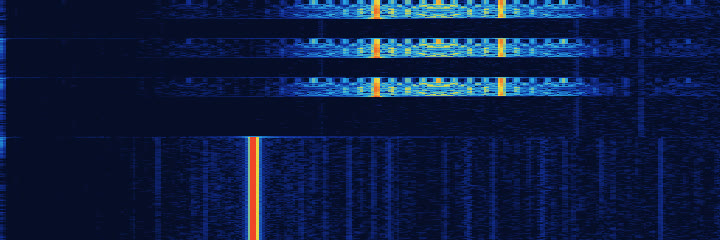
What's in the bursts?
A short digital header called SAME: who sent it (for example the National Weather Service), the event (TOR means Tornado Warning, RWT a Required Weekly Test), the counties it covers as six-digit codes, how long it lasts, and when it was issued. Weather radios read it and sound an alarm only for the counties you've chosen.
Where can I hear it?
NOAA Weather Radio broadcasts on seven channels between 162.400 and 162.550 MHz from more than 1,000 transmitters across the United States. Each transmitter sends a Required Weekly Test.
Why there's no sound on this page
Federal rules forbid transmitting emergency alert codes or tones except in a real emergency or an authorized test, and broadcasters have been fined for airing clips of them, including one copied from the internet. So this page shows the picture of the sound instead. Listening to NOAA Weather Radio yourself is perfectly legal; that's what it's for.
Easily confused with
- APRS and packet: short data bursts too, but no long steady tone
- DTMF touch-tones: short two-tone beeps