Numbers stations
A numbers station sounds like a flat, often synthetic voice reading groups of digits on shortwave, sometimes after a tune or a chime. The messages are widely believed to be for intelligence officers abroad, and they're sealed with a one-time pad that no listener can break.
What does it sound like?
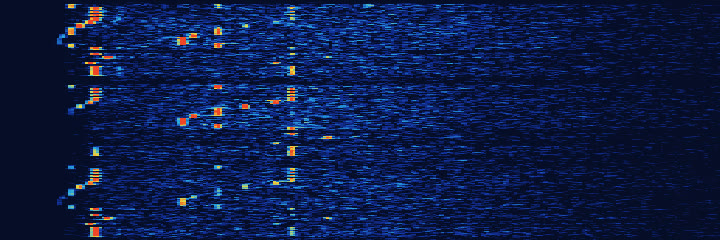
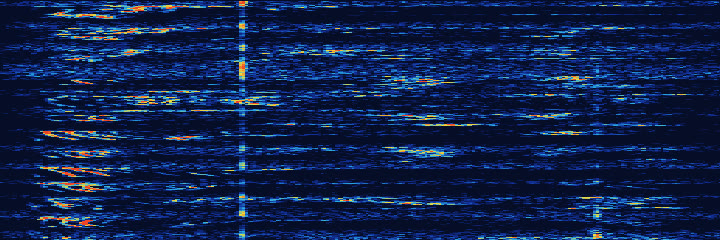
What are they?
Shortwave stations that broadcast formatted groups of numbers (or letters) on regular schedules. Nobody officially claims them; hobbyists catalog them by a naming system where E means English, G German, S Slavic languages, V other languages and M Morse.
Why can't anyone read them?
A one-time pad: each message is combined with a random key that's used once and destroyed. Used correctly, it can't be broken, so anyone can hear the numbers but no one outside can read them.
Famous examples
- The Lincolnshire Poacher (E03). A woman's voice reading five-figure groups, opened by a few bars of an English folk tune. Last heard in July 2008.
- E11, “Oblique”. A female English voice, still active, on schedules that change three times a year.
- HM01 (Cuba). A Spanish voice plus digital data. Off the air since August 23, 2024, when its transmitter failed.
- V32 (Persian). Appeared on February 28, 2026, hours after the US-Iran war began, reading digits after the word “tavajjoh” (“attention”). Monitors list 7910 and 7842 kHz at 02:00 and 18:00 UTC.
How can I hear one?
Hobbyist groups publish schedules; Priyom.org is the best-known. Most are heard with any shortwave radio in USB mode, at the listed time and frequency.
Easily confused with
- Time stations: they also speak numbers, but tick every second and give the real time
- Contest exchanges: hams trade numbers too, but two voices, with call signs