The Russian Woodpecker and the radars you can hear today
Over-the-horizon radar sounds like fast, harsh tapping or a rapid buzzing sweep across a slice of shortwave. The Soviet “Woodpecker” tapped 10 times a second; the radars you can hear today sweep 40 to 67 times a second.
What does it sound like?
What was the Woodpecker?
Duga, a Soviet over-the-horizon radar with sites near Chernobyl and in the Russian Far East. From July 1976 to December 1989 it radiated more than 10 megawatts between 7 and 19 MHz, tapping 10 times a second and hopping frequency at random, right across ham, aviation and broadcast channels. It stopped in 1989 with no official explanation.
Can I still hear radar like it?
Yes. Over-the-horizon radars bounce signals off the upper atmosphere to see thousands of miles away, and several still spill into the ham bands. The amateur societies' Intruder Watch service logged these in March 2026: Russia's “Kontayner” (about 40 sweeps a second, 12 kHz wide), Chinese radars (50 or 67 sweeps a second), and a UK radar on Cyprus. Australia's JORN and the US Navy's ROTHR use similar methods.
Where to listen
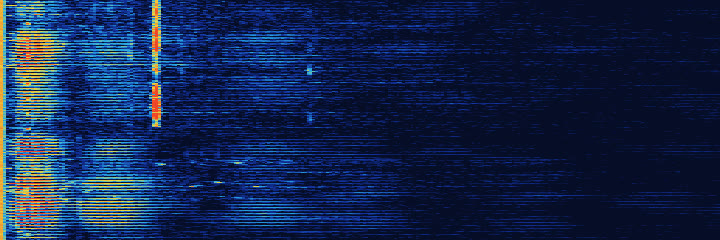
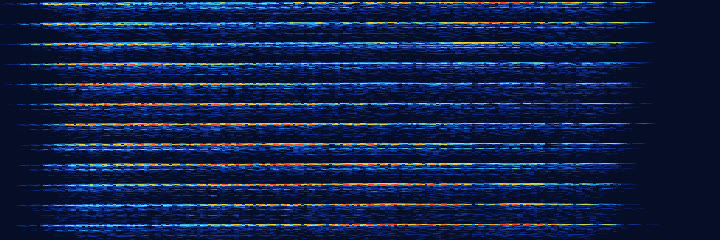
The 40, 20, 15 and 10 meter ham bands (around 7, 14, 21 and 28 MHz). On a waterfall display a radar looks like a wide block of repeating stripes.
Easily confused with
- UVB-76: one fixed frequency and a slow buzz, about one every two seconds
- Chirp sounders: one slow sweep through the whole band, heard as a brief chirp
- Electric fences and plasma TVs: buzz at power-line rates, but never sweep